
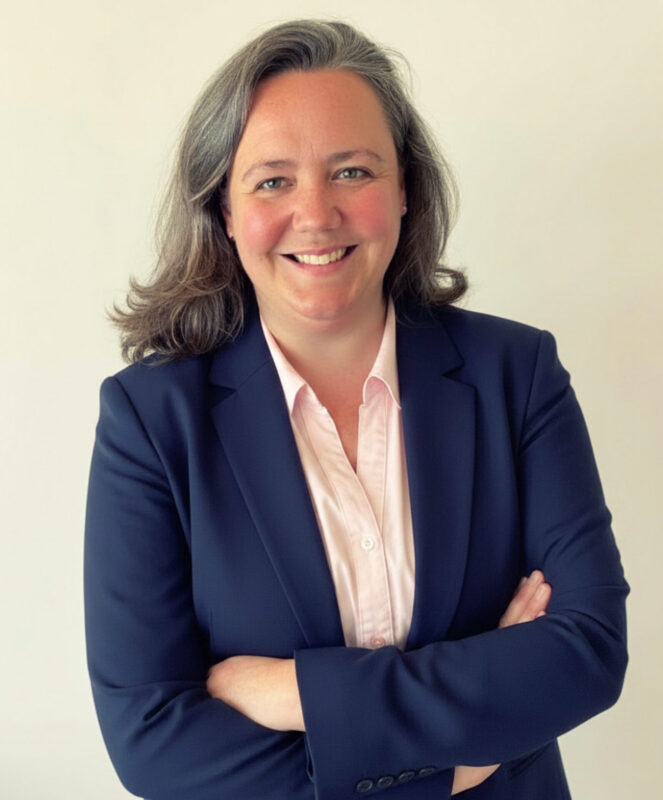
 We recently welcomed Claire Sarafilovic to the business, as Director of Professional Services. Stepping into this newly-created role, Claire has an exciting task on her hands as she looks to establish a fully integrated, in-house advisory capability. Now that she’s had a few weeks to get her feet under the desk, she’s shared some of her first insights into what lies ahead.
I’m now one month into my role with Morris & Spottiswood Group and I’ve really enjoyed spending these first few weeks exploring the business and meeting my new colleagues, clients and partners. I’ve spent a lot of time listening and understanding not only what we do, but the challenges our clients are trying to solve.
Through all the conversations I’ve been having, it has become increasingly clear: the challenges facing organisations today aren’t getting smaller, they’re becoming more connected.
Clients are no longer simply asking: “Can you deliver this project?”
They’re asking how to decarbonise their estate, what it takes to create workplaces that attract and retain talent, where the greatest value in their assets really lies, how operational performance can be improved and, ultimately, how sustainability, cost, people and performance can all be balanced at once.
These aren’t construction questions. They’re business questions and they require a different way of thinking.
For many years, the built environment has often operated in silos. Strategy is developed in one place, design happens somewhere else, delivery is handed to another organisation, and operational teams are left to try to maximise the value of the finished asset.
Yet the decisions made at the very beginning determine the success of an asset for decades to come.
Performance. Carbon. Cost. User experience. Operational efficiency. Resilience.
They’re all connected.
Clients need confidence that property and asset decisions support wider business objectives and deliver long-term value. They are looking for workplaces and facilities that are sustainable, efficient, adaptable and capable of evolving alongside changing organisational needs.
That’s why I’ve found myself thinking less about projects and more about outcomes.
At the outset, organisations need help defining what they’re trying to achieve and aligning investment with their strategic goals. From there, ideas become reality through thoughtful design and strong delivery. Once complete, the focus shifts to performance, efficiency, user experience and sustainability. Underpinning every stage is the technical expertise that helps organisations adapt as needs change.
What makes this particularly powerful is that it’s not a linear process. It’s a continuous cycle. The insights gained from operating a building should inform future investment decisions. Understanding how people use a workplace should influence future designs. Sustainability performance data should shape future strategies. Lessons learned through delivery should improve outcomes the next time around.
Each stage informs the next, and when those connections are made successfully, clients don’t just get successful projects. They gain higher-performing assets, better workplaces, improved sustainability outcomes and greater long-term value.
In a world where organisations are balancing net-zero commitments, workplace transformation, ageing assets, investment pressures and evolving user expectations, I believe there is a growing need for a more connected approach. One that brings together strategic thinking, technical expertise, delivery experience and operational insight.
As I continue helping shape the future of professional services within Morris & Spottiswood Group, one phrase keeps coming back to me:
Creating places that perform. Perform for people, organisations and communities.
My first month has reinforced something I’ve believed for a long time:
Great projects matter. But great outcomes matter even more.